

March 27, 2026 | Toronto real estate
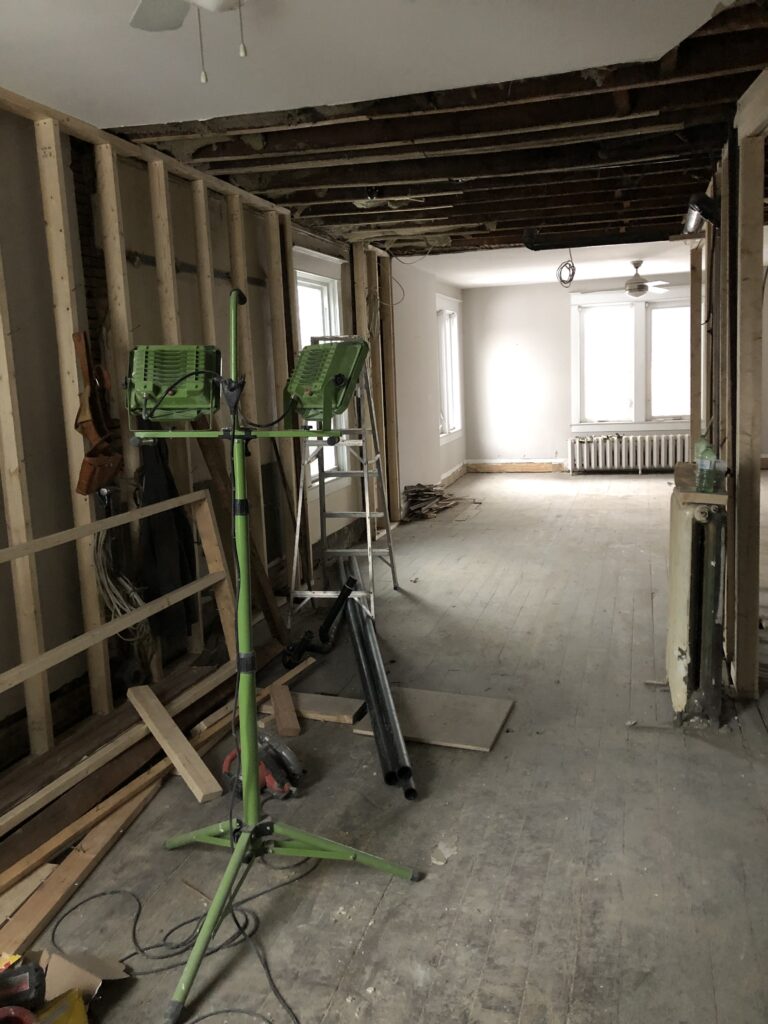
Renovations are fantastic—once they’re finished. I know this first hand as you can see from my mid-reno photo above from my last renovation about 8 years ago. That moment when everything comes together and you’re living in a space you helped design- it’s worth it. But getting there? That’s a different story. It’s part excitement… and a lot more waiting. Waiting on permits. Waiting on trades. Watching timelines stretch and budgets creep. It’s not unusual for the process to cost more—and take longer—than you expected.
Which is why, before you even buy a home, there’s a more important question to answer: What kind of renovation buyer are you?
Because you don’t need to be handy to renovate—but you do need to be honest about your budget, your tolerance, and your expectations.
1. The “Take It to the Studs” Buyer
This is the full reset. Walls open, systems replaced, everything reimagined. If that’s your plan, most cosmetic issues don’t matter. Old kitchen? Gone. Awkward layout? History. Dated finishes? Irrelevant. What does matter is the structure. Before you get too far, you’ll want a structural engineer to confirm the house is sound—and to understand what it would take to fix it if it’s not.
What to look for:
- The lowest purchase price you can justify
- A solid structure
- A good lot in a strong neighbourhood
Don’t be scared off by smells, drafts, or questionable design choices. Those are temporary problems. But be very aware of what isn’t—like structural issues or buried oil tanks that can quietly turn your “deal” into something else entirely.
2. The “Cosmetic Upgrade” Buyer
This is where most people land. You’re not rebuilding—you’re refining. Kitchens, bathrooms, storage, maybe opening up a wall or two in a house. The challenge here is making sure you’re not unknowingly signing up for a full renovation. Because there’s nothing worse than planning a cosmetic update… and spending your budget on wiring, insulation, or plumbing instead. A thorough home inspection is key. You want clarity on what’s already been updated—and what hasn’t.
What to look for:
- Homes with 70s/80s/90s renovations (dated, but often partially modernized)
- Functional systems, even if the finishes are tired
- Layouts with potential
This is where a bit of imagination pays off. Wood paneling, older tile, built-in speakers from another era—they may not look great, but they often hide a house that doesn’t need to be taken apart.
Condos can also fit nicely here: lighter updates, fewer unknowns, and major building components handled through maintenance fees. If buying a condo unit to renovate, just make sure you fully understand what steps need to be taken for a renovation, and understand what is and is not allowed in your building.
3. The “Move-In Ready” Buyer
No renovations. No dust. No decision fatigue. Just unpack and live. It’s the most straightforward option—and the most popular. But it comes at a cost. You’re paying for the renovation… just one that someone else already lived through. And because of that, these homes tend to attract more competition. Even then, no home is ever truly perfect. Surprises still happen—whether it’s a small leak, an aging roof, or something a home inspection didn’t catch.
What to look for:
- Well-maintained homes with recent updates
- Have a thorough investigation into things behind the walls like wiring and insulation. You want to make sure that the house is renovated all the way through the property and not just a cover up of an old house with problems.
- Well laid out kitchens and bathrooms where you can comfortably live
One small shift in thinking: homes that don’t present perfectly—but are fundamentally solid—can sometimes offer better value than the fully polished ones everyone is chasing.
Where This Usually Lands
Renovations are a strange mix of optimism and reality. They start with inspiration—and usually come with a few unexpected lessons along the way. They cost more than planned. They take longer than promised. And at some point, everyone questions their life choices (briefly). But they can also be incredibly worthwhile. The difference comes down to alignment.
If your budget, your expectations, and your tolerance for disruption match the type of home you buy, the process feels manageable—even rewarding. If they don’t, it can feel like an uphill climb from day one.
So before you fall in love with a house, take a step back and decide what role you actually want to play in it: Builder, editor… or just the one who gets the keys.
Because the smartest purchase isn’t about finding flawless home—It’s about choosing the version of the process that works for you. My next project is a laneway house in my backyard. Wish me luck! City of Toronto – Be good to me!